80 s Baby: A Designer’s Review for Craft Fair Success
As an embroidery designer who has spent countless hours behind the hoop and even more time standing behind a booth table at weekend markets, I have learned that not all designs are created equal. Some look fantastic on a screen but fall flat in person. Others are so complex they take forever to stitch, eating into your profit margins. Today, I am putting 80 s Baby under the microscope. This design sits within the popular Family Quotes category, tapping into that sweet spot of nostalgia and identity that drives impulse buys at craft fairs.
If you are an Etsy seller, a boutique maker, or a creative entrepreneur preparing for your next handmade market, you need designs that do more than just look cute. You need assets that sell. Let’s break down how this machine embroidery design performs in the real world, from the digitizing table to the customer’s hands.
First Impressions: Nostalgia Meets Modern Stitching
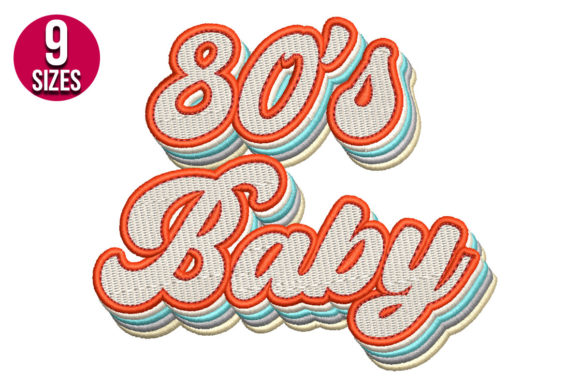
The moment I loaded the digital embroidery file for 80 s Baby, the vibe was immediate. It feels bold, slightly retro, and undeniably cool. It does not try to be overly elegant or rustic; instead, it leans into a fun, modern aesthetic that appeals to millennials and Gen Xers who proudly wear their birth decade like a badge of honor. In the context of Family Quotes, this design stands out because it is less about sentimental prose and more about cultural identity. It is punchy. It grabs attention.
For a craft fair booth, visual impact is everything. Customers walk by quickly. A design needs to communicate its message in under three seconds. 80 s Baby achieves this. The typography and styling suggest a playful energy that complements casual wear and home decor equally well. It is not subtle, which is exactly what you want for a craft fair product that needs to pop against a busy background of other handmade goods.
Product Versatility: Where This Design Shines
The description notes that this embroidery beautifully complements t-shirts, hoodies, jackets, caps, and home decor. From a production standpoint, I agree, but with some strategic caveats. Here is where I see this design performing best as a small shop product:
- Tote Bag Design: This is arguably the strongest contender. A canvas tote with 80 s Baby stitched prominently in the center is a high-margin item. The flat surface of a tote bag allows the design to lay perfectly without distortion, making it easy to hoop and stitch quickly.
- Apron Embroidery: With the rise of home cooking and entertaining, embroidered aprons are huge sellers. Placing this design on the bib of a denim or canvas apron creates a fun, giftable item for birthdays or holidays.
- Tea Towel Embroidery: Kitchen textiles are staple impulse buys. However, you must be careful with fabric texture. Ensure your stabilizer is robust enough to prevent puckering on thinner cotton towels.
- Embroidered Patch: If the design scales down well, turning it into an iron-on or sew-on patch is a brilliant move. Patches are low-cost, high-volume items that allow customers to customize their own jackets or bags later.
- Caps and Hats: While the description mentions caps, curved surfaces are tricky. If the design is wide, it may distort on a standard cap front. I recommend testing this on a structured cap first to ensure the lettering remains legible.
Production Reality: Stitch Density and Practicality
When evaluating any embroidery file for commercial use, I always look at the technical specs. Since the provided description states that the design comes with "multiple embroidery" formats but does not specify exact stitch counts or hoop sizes, you must verify these details before committing to a large batch. Here is what I look for during my test runs:
Stitch Density: Is the design too dense? High density can cause fabric to pucker, especially on lighter materials like t-shirts or tea towels. If 80 s Baby has heavy fill areas, consider using a cut-away stabilizer for garments to provide long-term support. For home decor like pillow covers, a tear-away might suffice, but always test first.
Thread Colors: The success of this design relies heavily on contrast. An 80s theme often invites neon or bold primary colors. However, if you are stitching on dark fabric, ensure your thread colors pop. Do not be afraid to deviate from the suggested color map if it means better visibility. A printable mockup can help you visualize different color combinations before you waste thread on a physical sample.
Small Details and Lettering: Check the smallest elements of the design. If there are tiny dots or thin lines, they may get lost if the design is scaled down too far. For a finished product like a small pouch, you might need to enlarge the design slightly to maintain clarity. Always inspect the stitch-out on scrap fabric identical to your final product material.
Boosting Your Booth Display and Online Presence
How does 80 s Baby affect your brand consistency and buyer engagement? It adds a layer of personality. For an Etsy seller, this design is perfect for creating cohesive listings. Imagine a set of products: a matching tote, a mug rug, and a pillow cover, all featuring the same nostalgic quote. This encourages bundle purchases.
In a physical booth, use this design to create eye-level displays. Hang embroidered jackets or display stacked pillows with the design facing forward. The bold nature of 80 s Baby makes it a natural focal point. It invites conversation. Customers might stop to say, "Oh, I’m an 80s baby too!" That connection is where the sale happens.
For your online listings, ensure your photography highlights the texture of the stitches. Close-up shots showing the quality of the commercial embroidery work build trust. Use natural light to show the true vibrancy of the thread colors. Include lifestyle shots—someone wearing the hoodie or holding the tote—to help buyers visualize the scale and utility of the item.
Designer Notes: Before You Hit Start
Before you launch this as a key part of your inventory, follow these critical steps to ensure quality and legality:
- Check Licensing: Confirm that your purchase of the design assets includes commercial licensing. You need explicit permission to sell finished products made with this file. Never assume; always read the terms.
- Test on Scrap Fabric: Never stitch directly on your final product for the first run. Use scraps of the exact same fabric and weight to test tension, registration, and stabilizer compatibility.
- Verify Hoop Size: Ensure the design fits comfortably within your machine’s hoop without requiring excessive re-hooping, which can lead to misalignment.
- Review Spacing: If adding this design to a garment with existing pockets or seams, measure carefully. The design should be centered and balanced.
- Create Real Mockups: Digital mockups are great, but nothing beats a physical sample. Make one perfect version to keep as your booth sample. It shows customers the true quality of your work.
In conclusion, 80 s Baby is a strong contender for your handmade product lineup. It taps into a powerful emotional trend, offers versatility across multiple product types, and has the visual boldness needed to stand out in a crowded market. By paying attention to technical details like stitch density and fabric choice, you can turn this digital file into a best-selling physical asset. Happy stitching!